
MAY in the Dahlia Patch
Updated: Oct 29, 2024
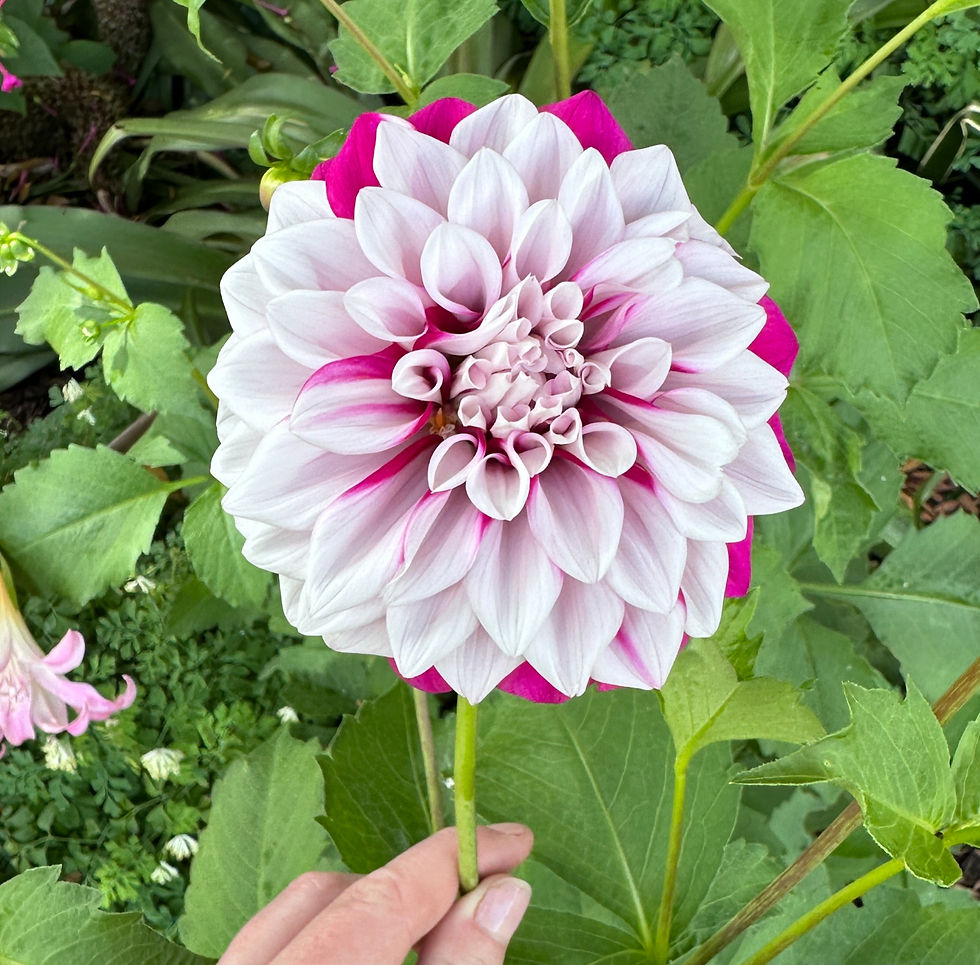
Photo: Ash Quinn. Cultivar "Majestic" grown from a tuber purchased from Le Flor Dahlia's
We're heading towards winter and there is already chill in the air. Most Dahlia's have almost stopped flowering or you may have noticed that they buds bloom and blow their centres much faster as the plant rushes to maximise pollination chances, so you may have been swapping cutting flowers for collecting seed in preparation for upping your stock for Spring of variations of your flowers.
With cooler temps and lots of moisture in the air keep an eye out for mildew forming as well as Botrytis. To help reduce the risk, as the plant begins to die back you can reduce the leaves by up to 50% to help increase air circulation. If you do notice sings of mildew it's best to get on top it these straight away to prevent spread and infection to the rest of your stock. Trim and destroy affected leaves and stems. A sulfur solution can be used to organically control of powdery mildew on dahlias. This works by creating an inhospitable environment for the fungus. Gardeners should avoid using sulfur when the ambient temperature is above 85 degrees F. (29 C.), as this can cause plant injury. Other methods include Neem oil and a very dilute solution of peppermint Dr. Bronners misted on the leaves twice weekly can also help with pests and mildew.

Before your flowers completely disappear making it harder to identify cultivators, if your Dahlia's aren't yet labelled now would be a great time to tag them for easy identification when digging and dividing. Flagging tape with a permanent marker is a great option that can be reused year after year.
While your plants will die down naturally, some prefer to cut the back in stages of thirds which will help reduce any risk of virus. When the plants begin to yellow you can cut them back by a third. A week or so later reduce by another third and finally when the plant has completely died back you can trim it to the base. Covering the cut stems with aluminium foil stops watering entering and rotting the crown. Alternatively, a hole drilled into the stalk near its base will allow water to drain from it.
Depending on your soil composition and how wet the weather is expected to be over winter will determine whether you think it safest to dig and store your tubers or if you are happy to overwinter them in the ground. If you do decide to over winter in the ground you may wish to spread a thick layer of mulch to help protect the tubers from frost.


Comments