
August in Robertson Gardens
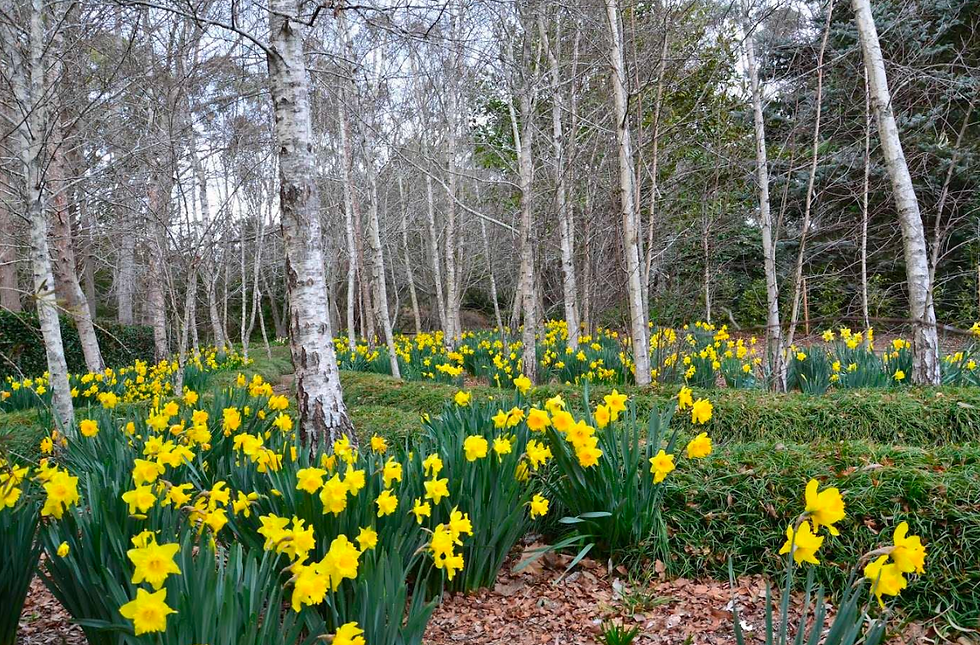
August in the highlands tends to be cold and windy, but with daffodils in full bloom, it reminds us that spring is just around the corner.
If it is too cold to be outside, spend some time doing a bit of planning around what you want to grow throughout the year. It is also an opportunity to stock up on seed, particularly if you are after something unusual. There are many online seed companies that can supply something a little bit different to the standard seeds at the nursery or hardware store. If you are after open pollinated seed, then it is either order them online or call in at the CTC and access the seed library.
Prune winter-flowering shrubs
Now is the best time to cut back autumn and winter flowering shrubs to encourage new growth in the coming spring. Ericas, winter-blooming lavenders, camellias, gordonia, daphne and yellow flax (Reinwardtia indica) are good examples. Natives such as heaths (Epacris and Woollsia spp.) and some species of banksia and grevillea are coming to the end of flowering and will appreciate a trim. The quickest way to prune shrubs is to give them an overall haircut using long-bladed shears.
The Vegetable Garden

Start chitting potatoes for planting out after the last frost. There is still time to divide chives and rhubarb and replant.
Sow seed. If your soil is warm enough (i.e. if you have raised beds), directly sow into the ground seed of peas, snow peas, broad beans, turnips, swedes, Asian greens, English spinach, spring onions, mesclun mix, rocket and coriander.
If it is still too cold, start the above in pots, in a glasshouse or warm spot.

Plant seedlings of silver beet, cabbage, cauliflower, broccoli and lettuce.

Continue to improve any soil that is unoccupied by adding compost, wood ash and well-rotted animal manures. Avoid mulching at this time of year in the vegetable garden, as it prevents the soil from warming up in spring. If your soil stays cold, it will prevent many of your spring/summer seeds from germinating until much later in the season.
The Orchard

There is still time to complete any pruning projects and plant new bare-rooted fruit trees. It is also a great time to feed and mulch your fruit trees.
Try planting garlic bulbs around the base of your fruit trees. Both mulch and garlic help to reduce leaf curl and brown rot on peaches and nectarines, and apple scab on apples and pears. To be on the safe side, spray peaches and nectarines to protect against leaf curl fungus. Use lime sulphur or a copper fungicide at the bud swell stage (just before the buds begin to open) but before pink bud stage or when flower colour shows. It is too late to spray once flowering occurs.
To refresh your memory on how to control codling moth in apples, here is an article from Peter Cundall. It is an excellent reference for organic control of a variety of orchard pests and diseases: organicgardener.com.au/blogs/fruit-patrol
It is also a good time of year to fertilise and mulch blueberries. Use a slow-release organic all-purpose mix.


Comments