
June in Robertson Gardens
Updated: Jul 16
Of all the seasons, winter is the most conducive to contemplation and planning. We can look at the garden and see its bones and really assess what works and what doesn't. From here we can begin to plan changes to the garden such as moving trees, adding or reducing beds and planning for our spring and summer harvest and floral displays.
It is time to start preparing for bare rooted roses, ornamental trees and fruit trees.
Preparing planting holes in advance allows the new purchases to be planted immediately once you get them home, minimising the time the roots are exposed to air and causing roots to dry out. All planting holes benefit from the addition of compost and well rotted manure and if prepared several weeks before planting there is no chance of the manure burning the new roots.
GET PRUNING
With trees bare it is great time to look carefully at your deciduous trees and shrubs and assess branch structure to determine if pruning is required. All dead or disease branches should be removed as well as any overlapping branches that have the potential to cause rubbing. Rubbing will cause wounds in the bark and act as an access point for pest and disease.


🌿 IN THE VEGGIE GARDEN
Winter is the perfect time to successive plant cool season crops like Asian greens, Snow peas and English spinach so, get out and get growing.

Also Plant Seedlings of broad bean, bulb onions (brown, white and red Spanish) and golden shallots bulbs.
SOW directly into the ground: (in a warm spot or raised bed) spring onions, broad beans and English spinach.
Watch out for rodent damage to carrots and parsnips and treat appropriately.
There is still time to plant asparagus crowns and rhubarb crowns. Asparagus and rhubarb crowns will be in stores soon and both appreciate a well-prepared bed dug deep and improved with lots of compost and well-rotted manure.
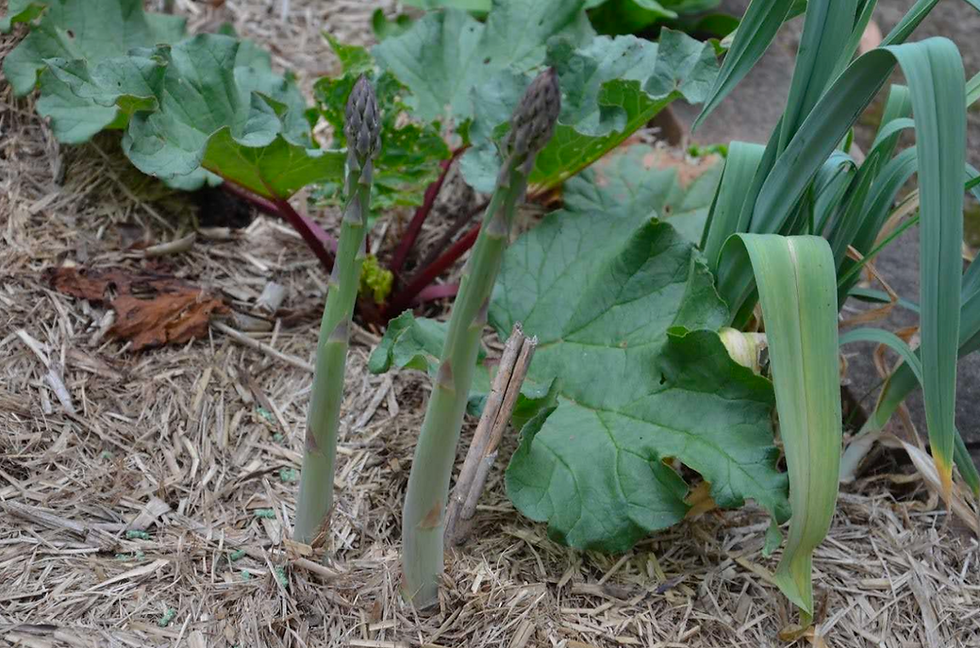
Perennials vegetable maintenance
Cut back asparagus fern, fertilise and mulch. Find a fertiliser with a combination of poultry manure, blood and bone and fish meal. Then add pot ash and wood ash. Add lime if you do not have wood ash. mix it well and scatter a small spade full around each plant, water well and then mulch with sugar cane mulch to a depth of 10 cm.
It is also the best time of the year to divide rhubarb crowns and replant and/or fertilise and mulch established clumps.
Irrigation
With cooler nights reduce the amount of time your irrigation is on and irrigate early in the morning.
IN THE ORCHARD
Time to start preparing sites for bare rooted trees and berries. Plants will start to appear in the nurseries in the next month so get your planting sites ready in advance by digging holes, adding amendments such as well rotted compost and rock minerals. This will mean, that once purchased, your plants can go into the ground straight away.
Here is a link to an ABC gardening video on how to plant bare rooted trees.
Composting Autumn Leaves
Continue to compost any fallen leaves Pick up your autumn leaves with the mower. This cuts the leaves smaller, so they decompose easier and the green lawn that you collect with them gives you a perfect Green/Brown ration for quick and even composting.
Harvest
It is also time to start harvesting lemons and Limes. Most gardeners have an excess so bring them along for the trading table at our next meeting.


Comments